
Last Updated: October 23, 2026
Quick Summary
Private dolphin watching tours offer personalized experiences where your captain tailors the route and pace to what you want to see, whether that’s dolphins, shelling, or exploring barrier islands. With small groups of no more than twelve people and US Coast Guard certified captains who know these waters intimately, you get flexibility and local expertise that larger commercial tours can’t match.
- Small groups of no more than twelve people mean everyone gets good viewing spots without competing for space
- Your captain can adjust the route in real time based on where dolphins are active and what interests your group
- US Coast Guard certified captains and University of Florida Master Naturalist guides bring decades of local knowledge about seasonal patterns and wildlife behavior
- Custom itineraries let you design the experience around your interests, whether that’s photography, birding, shelling, or family wildlife viewing
- Tours follow NOAA guidelines strictly, maintaining at least 50 yards from dolphins to let them behave naturally
Table of Contents
- What Makes Private Dolphin Watching Tours Different
- Marco Island Private Boat Tours: Your Options
- Ten Thousand Islands Boat Tours: Where to Go and What to See
- Best Time for Dolphin Watching Marco Island
- What to Bring on a Dolphin Tour
- Why Certification and Local Knowledge Matter
- Responsible Wildlife Viewing and Conservation
- Frequently Asked Questions
What Makes Private Dolphin Watching Tours Different
There’s a real difference between booking a seat on a crowded tour boat that leaves every hour on the hour and stepping aboard a private vessel where the captain tailors the experience to what you actually want to see and do. When you choose a private dolphin watching tour, you’re not just paying for access to the water, you’re paying for flexibility, personalization, and the kind of local knowledge that only comes from spending years on these specific waters.
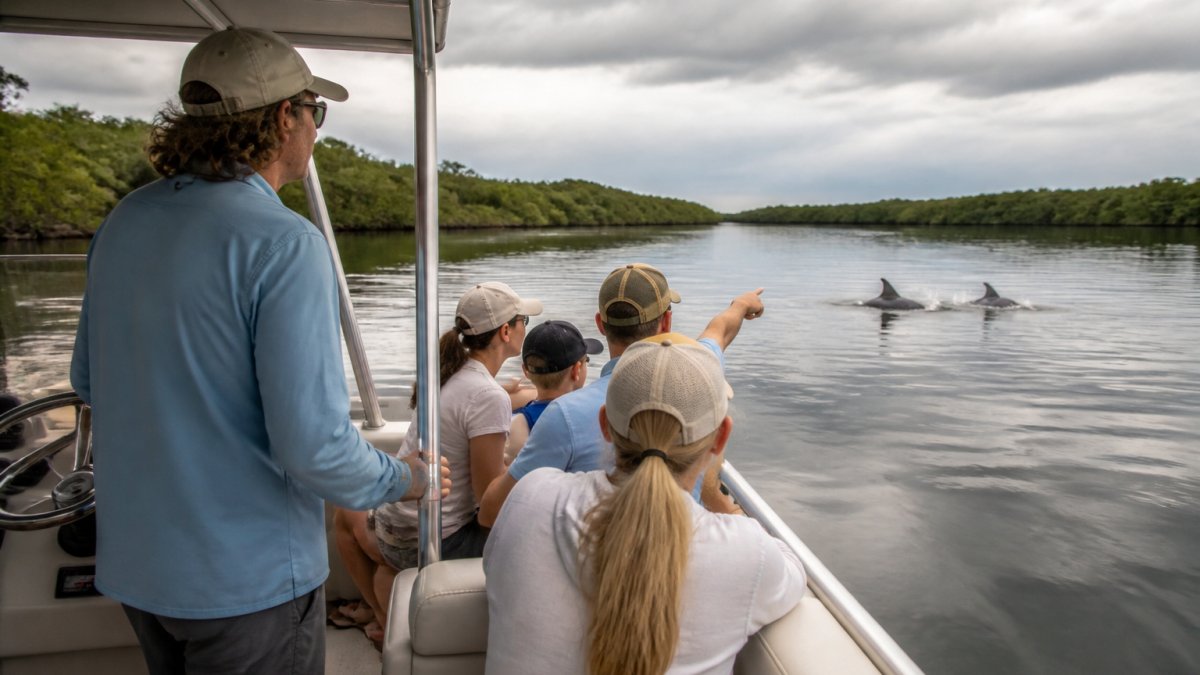
A private tour means your group sets the pace. If the dolphins are active and you want to spend an extra hour watching them hunt and play, you can. If you’d rather focus on shelling or exploring a particular barrier island, the captain adjusts the route.
The guest list matters too. A small group, no more than twelve people on our private tours, means you’re not competing for viewing spots or dealing with the noise and chaos of a larger commercial operation. Everyone gets a good view. Everyone gets heard. Conversations flow naturally, and the captain can answer questions without shouting over a crowd.
Marco Island Private Boat Tours: Your Options
Small-Group Excursions with Expert Guides
If you’re looking for a private dolphin watching tour that combines wildlife viewing with genuine education, small-group excursions hit that sweet spot between intimate and informative.
What sets Florida Island Tours apart is the caliber of guidance you receive. Our Master Naturalist guides don’t just point out wildlife, they explain the behaviors you’re witnessing, the ecology of the Ten Thousand Islands, and the conservation challenges facing these waters.
Small-group tours also adapt to your interests. Traveling with kids? The guide can focus on family-friendly wildlife encounters and keep the pace engaging. Are you a serious birder? We can route the tour to maximize sightings of roseate spoonbills, ospreys, and herons. Just want a relaxing cruise with some dolphin watching?
Custom-Tailored Itineraries for Your Interests
This is where private truly shines. Unlike a standard tour with a fixed route and fixed timing, a custom itinerary means you work with the captain before you even leave the dock to design an experience that matches what you actually want.
Maybe you’re celebrating an anniversary and want a sunset cruise with time to explore quiet beaches and search for shells. Or you’re visiting with grandkids and want a mix of wildlife viewing, shallow-water exploration, and a beach break where they can stretch their legs.
Florida Island Tours builds these custom experiences around your preferences, the season, the weather, and what’s actually happening on the water that day. The captain knows which barrier islands are best for shelling right now, where dolphins have been spotted recently, and what the tide schedule means for accessing certain areas.
Ten Thousand Islands Boat Tours: Where to Go and What to See
Wildlife Refuge Access and Barrier Island Exploration
The Ten Thousand Islands Wildlife Refuge is one of the largest undeveloped coastal ecosystems in the country. Exploring it from the water, especially with a knowledgeable guide, reveals a landscape that feels untouched and genuinely wild.
Dolphins are the headline act, but they’re far from the only reason to explore these waters. You might encounter manatees grazing in shallow seagrass beds, see roseate spoonbills feeding in the shallows with their distinctive pink plumage, or watch an osprey dive for fish.
According to NOAA Fisheries Marine Life Viewing Guidelines, respectful wildlife viewing means maintaining at least 50 yards from dolphins and 100 yards in certain locations. Our captains know these guidelines inside and out and follow them religiously. Watching wild dolphins behave naturally, not chased or crowded, is far more rewarding anyway.
The Ten Thousand Islands are genuinely wild, which means every trip is different. The dolphins, birds, and marine life are unpredictable. That’s what makes it real.
Prime Shelling Locations and Beach Stops
If shelling is on your agenda, the Ten Thousand Islands offer some of the best hunting grounds in Southwest Florida. The barrier islands collect shells from the Gulf, and timing matters enormously. Low tide exposes more beach, certain times of year bring different shell varieties, and knowing which beaches are productive right now requires local expertise.
Florida Island Tours knows which beaches are producing shells this season and what conditions make for the best collecting. A private tour means you can spend as much time shelling as you want, whether that’s a quick 20-minute stop or a full hour combing the beach. You’re not on anyone else’s schedule.
Responsible shelling means taking only empty shells and leaving living creatures undisturbed. It’s a principle we take seriously. The shells you find are souvenirs of your time on the water, not trophies taken from living animals. When you explore with us, you’re learning to appreciate these islands in a way that protects them for future visitors.
Best Time for Dolphin Watching Marco Island
Seasonal Patterns and Wildlife Activity
Dolphins are in these waters year-round, but their behavior and activity levels shift with the seasons. Understanding those patterns helps set realistic expectations for your tour and makes for better planning.
Fall and winter (September through March) can be a great time for dolphin watching. The water cools, baitfish move into the shallow backwaters, and dolphins follow. The weather is also often more comfortable, with cooler temperatures, lower humidity, and generally calmer conditions.
Spring and summer (April through August) are warmer and can be productive, but dolphins are more dispersed. They’re still around, but they spread out across a larger area, which means fewer concentrated sightings. The trade-off is that the water is calmer and warmer, which appeals to some visitors.
Summer brings afternoon thunderstorms that can develop quickly on the water. Tours may be shortened or rescheduled for safety. Always confirm weather conditions with your captain before heading out.
Weather, Tides, and Realistic Expectations
Here’s the honest truth: dolphins are wild animals. They don’t perform on schedule. A private dolphin watching tour gives you the best possible chance of seeing them, but it’s never a guarantee.
Tides matter more than most visitors realize. Incoming tides push baitfish into the shallow mangrove areas where dolphins hunt. Low tide exposes more feeding ground. Your captain knows the tide schedule and plans accordingly. Wind also matters, calm mornings are usually more productive than breezy afternoons.
Water temperature, salinity, and seasonal migrations all influence where dolphins congregate. A captain who’s been running these waters for years understands those patterns and knows where to look. That’s the value of working with someone who knows this specific area intimately.
What to Bring on a Dolphin Tour
Preparation makes the difference between a comfortable outing and a frustrating one. Here’s what actually matters:
- Sunscreen (reef-safe): You’re on the water with no shade. Reapply often, especially after swimming or getting splashed.
- Hat and sunglasses: Polarized sunglasses cut glare off the water and help you spot dolphins and wildlife.
- Light layers: Even on warm days, wind on the water creates a chill. A lightweight jacket or fleece is smart.
- Water and snacks: Stay hydrated. The sun and salt air are dehydrating.
- Camera or phone: You’ll want to capture moments, but keep it secure so it doesn’t end up in the Gulf.
- Towel: If you’re planning to wade or explore beaches, bring something to dry off with.
- Closed-toe shoes: Helpful for walking on shells and rocky areas. Flip-flops work for the boat.
Florida Island Tours boats are fully equipped and comfortable, this isn’t roughing it.
Why Certification and Local Knowledge Matter
When you’re trusting someone to guide you safely on the water and share knowledge about local wildlife and ecosystems, credentials matter. A US Coast Guard certification means the captain has met federal safety standards and knows how to operate the vessel safely.
A University of Florida Master Naturalist certification goes further. It means the guide has completed formal training in Florida’s ecosystems, wildlife identification, and conservation principles. They’re not just telling stories; they’re sharing verified knowledge.
Local knowledge is something you can’t get from a certification, but it’s equally valuable. A captain who’s spent years on these specific waters knows things that don’t appear in any manual. Where dolphins congregate during different tides.
The Dolphin Explorer combines wildlife viewing with scientific research and guest education, demonstrating how private tours can blend recreation with genuine learning.
Responsible Wildlife Viewing and Conservation
Respect for wildlife isn’t just a nice principle, it’s central to why these islands are worth visiting in the first place. When you see a wild dolphin, you’re witnessing an animal that’s thriving in its natural habitat. Keeping it that way means following guidelines that protect them.
NOAA guidelines require maintaining distance from marine mammals to avoid stress and disruption. We follow those guidelines strictly. You won’t see us chasing dolphins, cutting them off, or crowding them.
The same respect applies to nesting birds, sea turtles, and every other creature you encounter. We don’t land on islands during nesting season. We don’t collect live shells or disturb seagrass beds.
Your role as a visitor is simple: observe, appreciate, and follow the captain’s guidance. The islands will reward you with genuine encounters if you give the wildlife space and respect.
Choosing a private dolphin watching tour means investing in an experience designed around what matters to you, guided by someone who genuinely knows these waters. Florida Island Tours offers that combination of local expertise, small-group intimacy, and commitment to responsible wildlife viewing. Book a private dolphin watching tour and discover why these Ten Thousand Islands have captivated explorers, naturalists, and families for generations.
Frequently Asked Questions
What’s the difference between a private dolphin watching tour and a large group tour?
Private dolphin watching tours limit group size, giving you more personalized attention from your captain and guide. You set the pace, choose your route, and spend time at spots that interest you most. Large group tours follow fixed schedules and routes with dozens of passengers. With a private tour, you’re not competing for deck space or the captain’s attention, and you can ask questions without feeling rushed.
What’s the best time for dolphin watching around Marco Island?
Dolphins are active year-round in these waters. Early morning and late afternoon tend to offer calmer conditions and better wildlife viewing. Tides matter too, dolphins often feed in shallower waters during certain tide cycles. A local captain knows these patterns and will time your tour for the best chances of encounters.
What should I bring on a dolphin tour?
Bring sunscreen, a hat, and sunglasses to protect yourself from reflection off the water. Wear comfortable clothes you don’t mind getting splashed, and consider a light layer even in warm months, wind on the water cools things down. A camera or phone is great for photos, but bring a waterproof case. Bring water to stay hydrated, and if you’re prone to motion sickness, take medication before departure.
Are private dolphin tours suitable for families with kids?
Yes, private tours work well for families because the captain can adjust the experience to your children’s ages and interests. Younger kids often stay engaged longer in a relaxed, personalized setting than on a crowded boat. Captains can explain what you’re seeing in age-appropriate ways and give kids time to ask questions. Just be honest about how long your children can comfortably sit on a boat, and your captain can plan accordingly.