


Last Updated: November 14, 2026
Quick Summary
For a shelling tour, pack water shoes or closed-toe sandals, a quick-dry shirt and shorts, a hat with a chin strap, reef-safe sunscreen, and polarized sunglasses. Bring a dry bag for your phone, a towel, and a small bucket or scoop for finds.
- Water shoes or closed-toe sandals beat flip-flops, which slide off on wet sand.
- Choose quick-dry clothing over heavy cotton for comfort on the water.
- Pick reef-safe sunscreen and check the label before you pack it.
- Wrap delicate shells in a towel so they don’t crack on the ride back.
- Leave living creatures in place and rinse finds with seawater, not fresh water.
Table of Contents
- What to Bring on a Shelling Tour: The Essentials
- Choosing the Right Shelling Bag and Tools for the Beach
- What Should I Wear on a Shelling Tour and the Best Time of Day to Look for Shells
- Frequently Asked Questions
A shelling tour is one of the best ways to spend a morning on the Gulf, but a little packing goes a long way. Here’s what to bring.
What to Bring on a Shelling Tour: The Essentials
Start with footwear. Water shoes or sturdy closed-toe sandals beat flip-flops, which slide off on wet sand and offer no protection from shell edges or the occasional oyster bar. A light, quick-dry shirt and shorts beat heavy cotton, and a hat with a chin strap stays put when the boat picks up speed across Caxambas Pass.
Must-haves: reef-safe sunscreen and a wide-brim hat, polarized sunglasses (they cut glare and help you spot shells in the shallows), water and snacks, a light layer for wind, and a towel and dry bag for your phone.
Confirm what the boat supplies before departure.
Families with young children should bring a spare set of clothes and a snack; anyone with mobility needs will do best in shoes with real tread, since the walk to the shell line can be soft and uneven.
Watch out: sunscreen that isn’t reef-safe can harm the very shallows you’re exploring, so check the label before you pack it.
Here’s a quick look at the essentials you’ll want to pack for the morning.
| Item | Why bring it | Note |
|---|---|---|
| Water shoes or closed-toe sandals | Protects from shell edges and oyster bars | Flip-flops slide off on wet sand |
| Quick-dry shirt and shorts | Stays comfortable on the water | Better than heavy cotton |
| Hat with chin strap | Stays put in breezy conditions | Useful on fast boat rides |
| Reef-safe sunscreen | Protects you without harming shallows | Check the label before packing |
| Polarized sunglasses | Cuts glare and helps spot shells | Works well in shallow water |
| Dry bag or sealed bag | Keeps your phone safe | Pack a towel for the ride back |
Choosing the Right Shelling Bag and Tools for the Beach
A small bucket works for sturdy shells, while delicate ones should be wrapped in a towel or soft cloth so they don’t crack on the ride back. If you’re new to this, our guide to going guided shelling as a beginner explains what equipment to expect.
Bring a small scoop or a pair of gloves, but leave the big digging equipment at home. A small scoop is usually all you need to turn over a shell without damaging it.
Rinse sand off your finds with seawater, not fresh water, and let them dry in the shade rather than baking in the sun, which can fade colors and make brittle shells crack. Pack them so they don’t rattle against each other.
Before you take anything home, check that shells are empty and living creatures have been left in place. A shell with an animal inside, or one that still has its operculum (the little trapdoor some snails use), is a live animal and should go back where you found it. Responsible collecting keeps these beaches healthy.
When in doubt, leave it on the beach and enjoy the find from a distance.
What Should I Wear on a Shelling Tour and the Best Time of Day to Look for Shells
Dress for sun and water: lightweight, quick-dry clothing and a hat with a chin strap for breezy days. For a full walkthrough of the day, see what to expect on a guided eco tour.
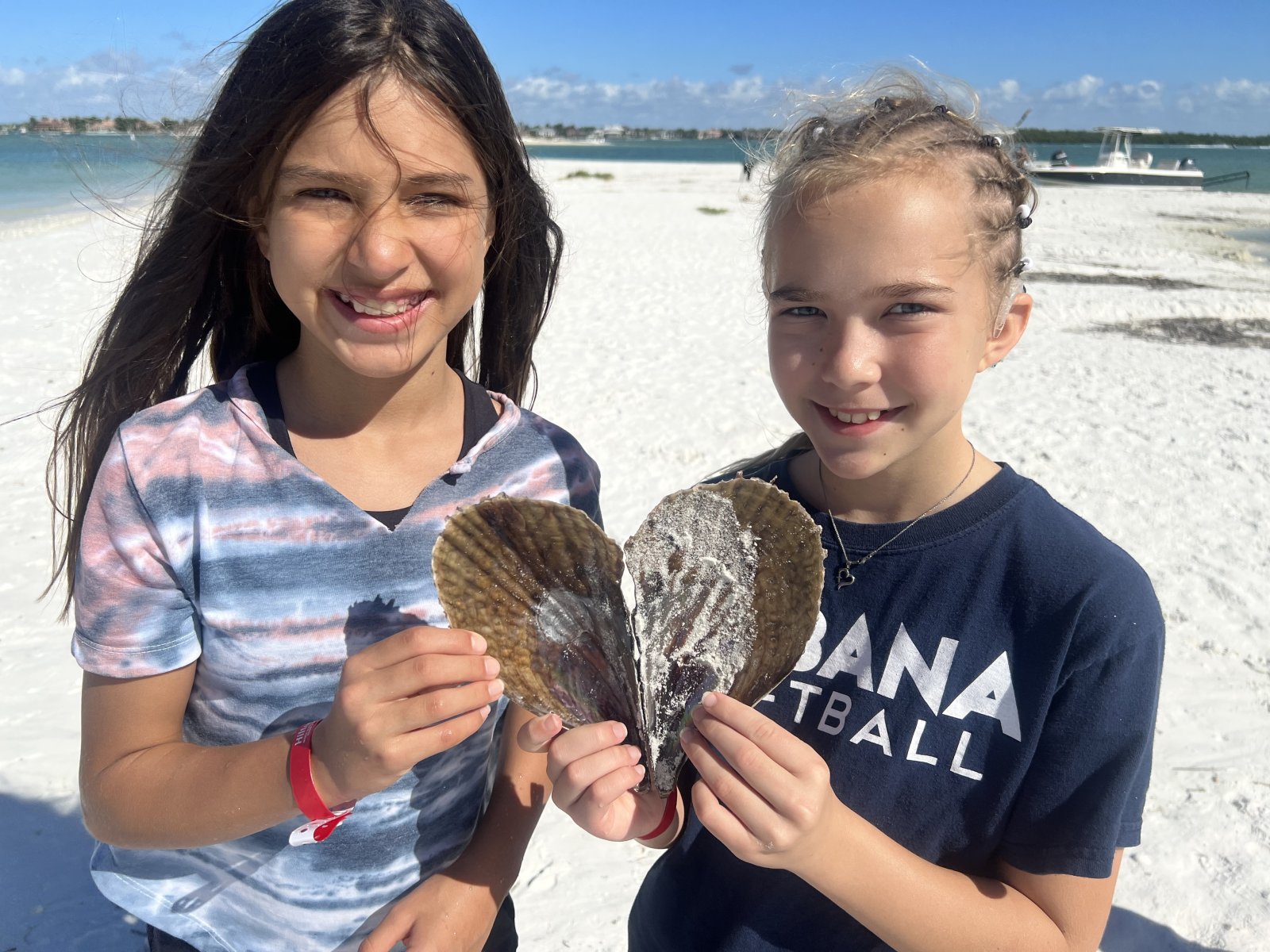
Morning and the hour before the tide turns are often the best times to look for shells, the beaches are quieter, the water calmer, and a lower tide exposes more sand. Watch the tide schedule before you go.
Bring a sealed bag for your phone and a towel for the ride back. Shelling is more fun when you’re comfortable from start to finish.
Ready to see the islands from the water? Book your shelling trip with Florida Island Tours and let our captain show you where the good finds wash ashore.
Frequently Asked Questions
What should I bring on a shelling tour?
Bring water shoes, a hat, reef-safe sunscreen, polarized sunglasses, plenty of drinking water, and a light layer. A mesh bag for draining sand, a small bucket for delicate finds, and a phone or camera in a sealed bag are also useful. Pack snacks and a towel, too. Because the boat ride can be long and the sun is strong on open water, it is better to carry more water than you think you need. Leave a dry change of clothes in the car for the ride home.
What kind of bag is best for collecting shells?
A mesh bag works best for most shelling. It lets sand and water drain out while you keep your finds in one place. Use a small bucket for sturdier shells or anything you want to keep from getting crushed. Keep the shells you collect separate from the rest of your gear so they don’t get bumped. A zippered mesh bag is handy on a boat because it won’t spill when the waves pick up.
How can I collect shells responsibly?
Only take empty shells. If a shell has an animal inside, or you aren’t sure, leave it where it is. Live shells and other living marine creatures should stay in the water. Check each shell before you bag it, and put back anything that is still alive. Take only what you can carry and enjoy, and leave the rest for other visitors and the wildlife that depends on these beaches.