

Ten Thousand Islands birds turn a simple boat ride into a family nature class. From ospreys to spoonbills, every bend brings new wings, colors, and sounds. Join Florida Island Tours and let the islands teach your family, one feathered moment at a time.
Book NowBook Now
Birds of the Ten Thousand Islands: Family Field Guide
Welcome to a backyard full of wings
Ten Thousand Islands birds reward curious families with color, drama, and easy viewing from the water. These islands stretch like stepping-stones between Marco Island and the Everglades. They shelter rookeries, sandbars, oyster flats, and quiet creeks. Each habitat holds different birds, behaviors, and sounds. Families love how close the action feels on a small boat. With a calm route and patient pace, kids notice details adults often miss.
How to use this family field guide to Ten Thousand Islands birds
This guide introduces the habitats you will visit and the birds you will likely see. It explains simple identification cues for families, not advanced jargon. This guide provides seasonal timing to ensure expectations align with the calendar. It adds gentle etiquette, because nesting birds need space to thrive. Finally, this guide finishes with easy gear tips and a sample route. Florida Island Tours weaves these ideas into every eco outing.
Mangrove edges: the green city where life never stops
Mangrove forests line most channels and create busy bird neighborhoods. Ospreys perch on dead limbs and watch for mullet beneath the chop. Great egrets and tricolored herons stalk tiny baitfish in shallow pockets. Night herons skulk under roots when the sun runs high. Mangrove cuckoos sometimes whisper from the shade, though sightings are rare. Look for snowy egrets flashing yellow feet as they dance after minnows.
Sandbars and beaches: the conveyor belt of snacks
Tides sculpt bars that concentrate food for shorebirds and terns. Sanderlings race waves like wind-up toys, stitching the waterline. Willets call loudly while probing for crabs in firmer sand. Black skimmers slice the surface at dusk with outstretched lower bills. Royal and sandwich terns hover and plunge with crisp precision. Please walk below flocks and avoid any posted nesting zones.
Oyster bars and tidal flats: the lunch counters of the backcountry
At lower water, oyster bars rise like knobby islands across channels. White ibis march in lines, pulling ghost shrimp from muddy seams. Reddish egrets chase bait with wing-shadow dances and sudden pivots. Great blue herons stand like statues and strike with lightning speed. Watch also for yellow-crowned night herons working crab holes. Move slowly near bars to prevent flushing feeding flocks.
Open bays and passes: where wings meet wind and tide
Wider water invites bigger wings and sweeping aerial shows. Brown pelicans glide low, then fold and plunge with satisfying splashes. Double-crested cormorants dive deeply, surfacing far from their splash points. Anhingas swim with only necks exposed, snake-like and silent. In spring, swallow-tailed kites scissor the sky with effortless grace. On cooler mornings, bald eagles patrol edges and steal fish from ospreys.
Ten Thousand Islands Birds you’re likely to meet
Osprey
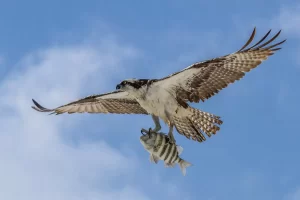 Ospreys are the Ten Thousand Islands birds you will probably see first. Look for a white head with a dark eye stripe. Watch the hover, then the drop, then the shake to dry feathers. Nest platforms appear on markers and dead snags near channels. Adults deliver fish to nestlings with proud, focused energy. Kids love counting wingbeats before the final plunge.
Brown pelican
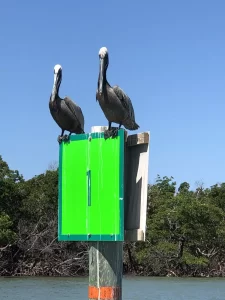
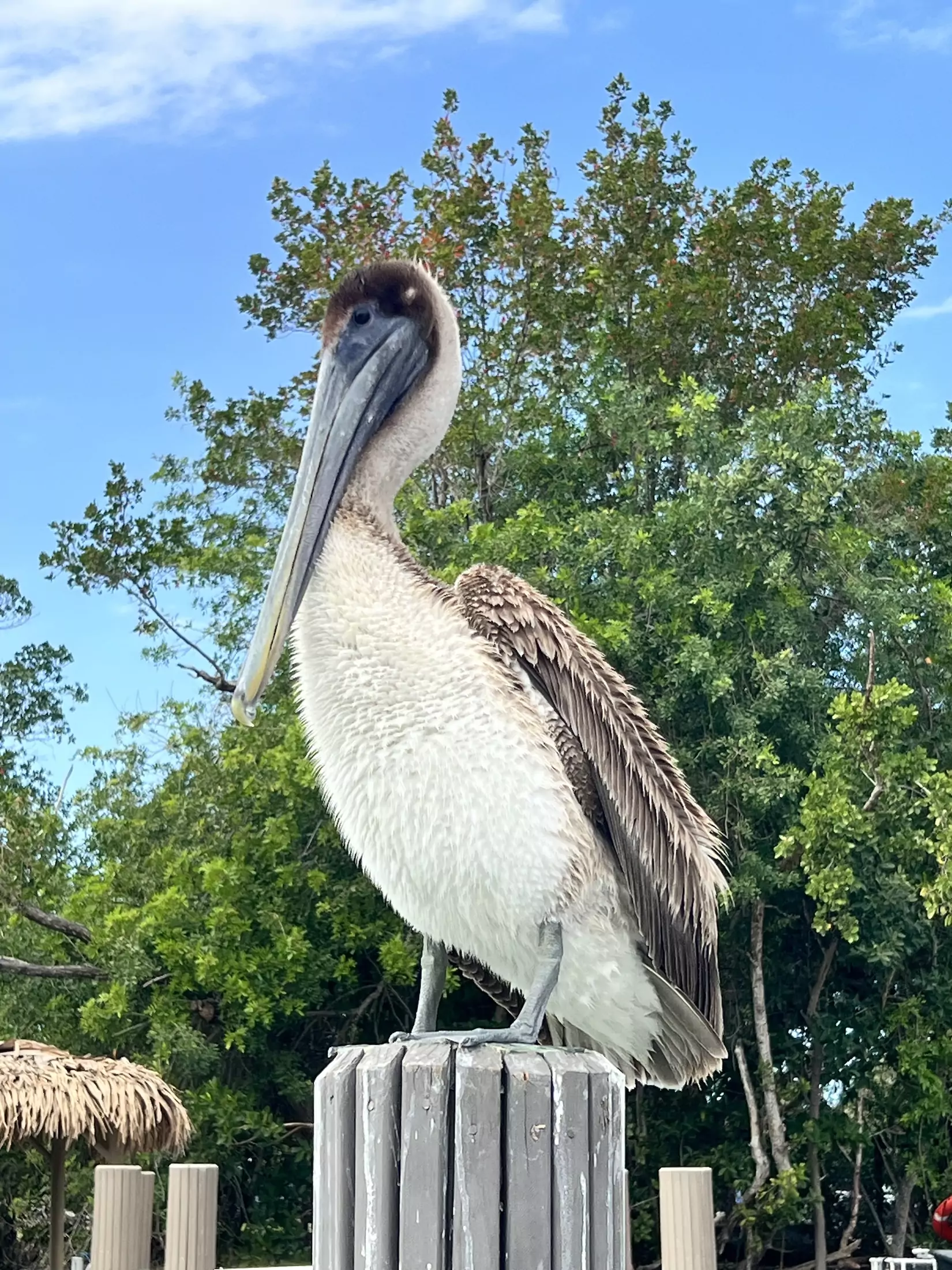
Brown pelicans look heavy but fly with calm, confident control. They skim inches above the surface to ride a pressure cushion. When they spot bait, they collapse their wings and spear the water. Adults show a pale head and a big throat pouch. They often raft together and preen after feeding sessions. Please give resting rafts space so birds can conserve energy.
Great blue heron
Great blue herons are tall, gray, and calmly methodical hunters. They favor edges with depth next to shoals and bars. The long neck coils, then strikes with surgical precision. Their croak carries across creeks when they lift at close range. Young birds show browner tones and shorter plumes. Keep voices soft when drifting past a hunting heron.
Reddish egret
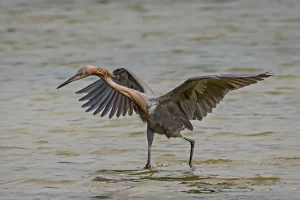 Reddish egrets are the clowns and athletes of shallow flats. They open wings like capes and chase minnows in chaotic bursts. Dark variety birds appear gray-black with bouncy, shaggy necks. Light variety birds show pale bodies and bright pink bills. Both flavors move with unmistakable flourish and quick pivots.
Kids often nickname them the “dancing birds” after one sighting. The reddish egret is unmistakable as it runs after the fish it wants to catch, flapping its wings and darting side to side. Most sight-feeding birds, such as egrets and herons, stand still and wait. The reddish egret doesn’t have the patience of other Ten Thousand Islands birds!
Snowy egret
Snowy egrets glow white and move with quick, delicate steps. Black bills and black legs frame bright yellow feet. Those feet stir prey like little high-visibility pompoms. Families can compare size against larger great egrets nearby. Snowies often feed near tricolored herons on bars and seams. Watch for short, staccato chases when shrimp flush.
White ibis
White ibis travel in friendly groups across flats and wrack lines—curved orange bills probe for crabs and worms in wet sand. Juveniles appear brown and mottled before whitening with age. Flocks angle their wings together when crossing channels against the breeze. Their soft grunts carry faintly when feeding in tight clusters. Kids love the easy shape and cooperative behavior.
Roseate spoonbill
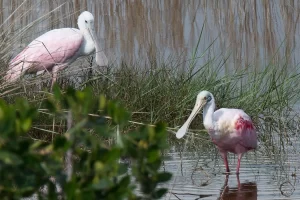 Roseate spoonbills bring the splash of pink every family hopes for. They sweep flat bills side to side through shin-deep water.
Bright adults show red shoulders and orange faces during breeding. Younger birds appear paler with white shoulders and softer pink. They often mingle with ibis on wide, quiet mudflats. Please enjoy them from afar during nesting months.
Around Marco Island and in Southwest Florida’s Ten Thousand Islands Birds like to joke that this beautiful pink bird is a “redneck flamingo.”
Anhinga and Double-crested Cormorant
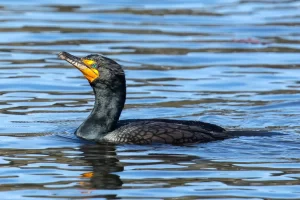 Anhingas and cormorants confuse many first-time visitors at a distance. Both dive often and perch with spread wings to dry. Anhingas have pointy bills and longer tails with sharper profiles. Cormorants show hooked bills and heavier chests on markers. Both species hunt edges where bait stacks behind current breaks. Kids enjoy tallying how far divers pop up from splash points.
Anhingas prowl quiet creeks like living periscopes. They swim low, with only necks and heads showing. Then they vanish, diving after small fish and shrimp. After hunting, they perch and spread wings to dry. Long, pointed bills separate them from hooked-bill cormorants. Slim tails and sharp profiles add to the “snakebird” look. Watch for sudden pops far from the dive splash. Calm mornings in mangrove channels offer the best views. Keep voices low so drying birds stay relaxed.
Double-crested cormorants fish hard across the Ten Thousand Islands. Look for a hooked bill and orange throat patch. They swim low, then dive and surface far away. After hunting, they perch on markers and spread wings to dry. In breeding season, twin white crests frame bright blue eyes. Young birds look browner with paler breasts. Give drying birds space so their feathers can recover. Calm mornings make their underwater pursuits easy to follow.
Royal Terns
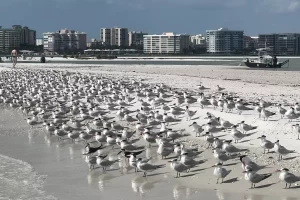 Royal terns patrol passes in sleek lines, scanning for bait. Look for big orange bills and pale gray backs with white undersides. Breeding birds wear bold, shaggy black caps that frame bright eyes. Outside breeding, the cap fades and shows a messy, receding hairline. They hover, then plunge headfirst and surface gulping tiny fish.
Listen for sharp, rolling calls as flocks trade places along bars. You’ll often see them resting with sandwich terns and laughing gulls. Please walk below resting birds so they can conserve energy. Winter through spring brings the most reliable, family-friendly viewing here.
Royal terns make perfect weathervanes on sandbars and passes. When the breeze rises, every bird faces straight into it. The whole flock points like arrows you can read from afar. As gusts shift, heads swivel and the line reorients. Captains use this to plan quiet drifts and camera angles. Families can spot tide influence when terns face the current instead. Watch both cues to learn the water’s story quickly.
Black skimmers
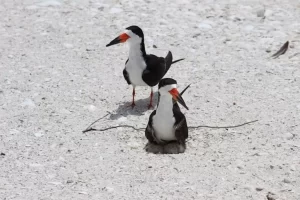 Black skimmers turn dusk into a show along quiet passes. Their lower bill is longer, made for slicing water.
They fly low, wings steady, and drag that blade-like bill. When it touches a minnow, the head snaps closed.
Parents trade off feeding and guarding sandbar scrapes. Chicks beg in rasping voices that match the adults. During nesting season, posted zones protect fragile broods.
Families should watch from below the flocks and give generous space.
Burrowing owls
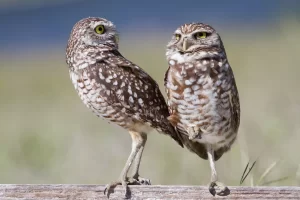 Burrowing owls live on Marco Island’s sandy lots, not deep in the mangroves. They stand on long legs beside small, roped burrow openings.
Bright yellow eyes and white eyebrows give them a surprised look. These owls hunt by day, chasing beetles, dragonflies, and tiny lizards.
Families can watch from behind posted signs and stay outside rope perimeters. Keep dogs leashed and voices low to avoid stressing nesting pairs.
Early morning and late afternoon offer gentle light and relaxed behavior; they are protected in Florida. Binoculars reveal head-bobbing, bill clacks, and soft chattering calls.
Oystercatcher
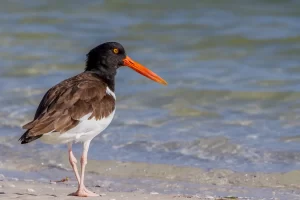 American oystercatchers stand out across Ten Thousand Islands sandbars with bold black-and-white bodies.
Bright orange bills and pink legs make them easy for kids to spot. They walk oyster bars and pry shells open with powerful, chisel-like bites.
Listen for the sharp “wheep” calls as pairs defend feeding space. Nests sit on shell rakes and open spits, exposed to disturbance.
Please pass below flocks and give roped areas plenty of distance. Lower tides reveal their best foraging, especially on calm winter mornings.
Bald Eagle
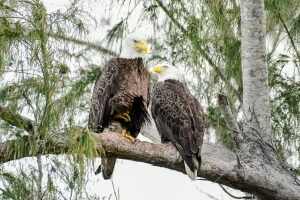 Bald eagles rule the big skies over the Ten Thousand Islands. Adults show bright white heads and tails with dark bodies.
Juveniles appear mottled brown and learn to soar on rising air. Watch them pirate fish from ospreys or pluck mullet near passes. They perch on tall mangroves, markers, and dead snags to survey the water.
Nesting ramps up in the cooler months, with busy stick nests. Early mornings offer calm winds and crisp light for family viewing.
Ten Thousand Islands Birds: Seasonal visitors worth watching for
White Pelicans
American white pelicans arrive each winter in broad, bright flocks across the Ten Thousand Islands. Their wings stretch nearly nine feet, flashing black tips when they lift. Unlike brown pelicans, they do not plunge-dive. Instead, they herd bait together and scoop fish with huge pouches. You often see them rafting quietly on calm bays and sandbars. Their orange bills glow in afternoon light and thrill kids instantly. Please watch from a distance, since resting flocks need space to refuel.
Swallow-tailed kites
Swallow-tailed kites slice the sky like black-and-white scissors. They arrive in spring and patrol above mangroves and bays. Long forked tails steer tight turns with tiny flicks. They catch dragonflies midair and pluck tree frogs from canopies. Sometimes they dip to drink while still flying. Look up on calm mornings for circling kettles. Families can spot them from March through July most reliably. Their effortless flight always steals the show.
Piping Plovers
Piping plovers are tiny, sand-colored shorebirds that blend with the beach. They favor quiet, flat sand near the waterline. You’ll notice the run-stop-peck rhythm as they hunt. In winter, they rest on Ten Thousand Islands sandbars and spits. Look for orange legs and a crisp face mask. Breeding birds show a narrow black neck band in spring. Give them wide space, since they are a protected species. Keep kids and pets below resting flocks and out of roped areas.
Peregrine Falcons
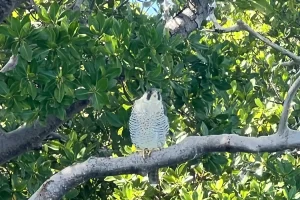 Peregrine falcons rocket over the Ten Thousand Islands during fall and winter. Look for a slate back, barred chest, and bold dark mustache. Juveniles appear browner with streaked chests and slightly duller faces. They stoop on shorebirds and terns at speeds that defy belief.
Scan sandbar edges and passes after cold fronts, especially at dawn. Perches include channel markers, beach dunes, and the tallest mangrove snags.
Keep distance, since repeated flushes burn valuable hunting energy. Kids love timing the stoop from first wing tuck to strike. Their recovery after pesticide bans shows how protection saves apex birds.
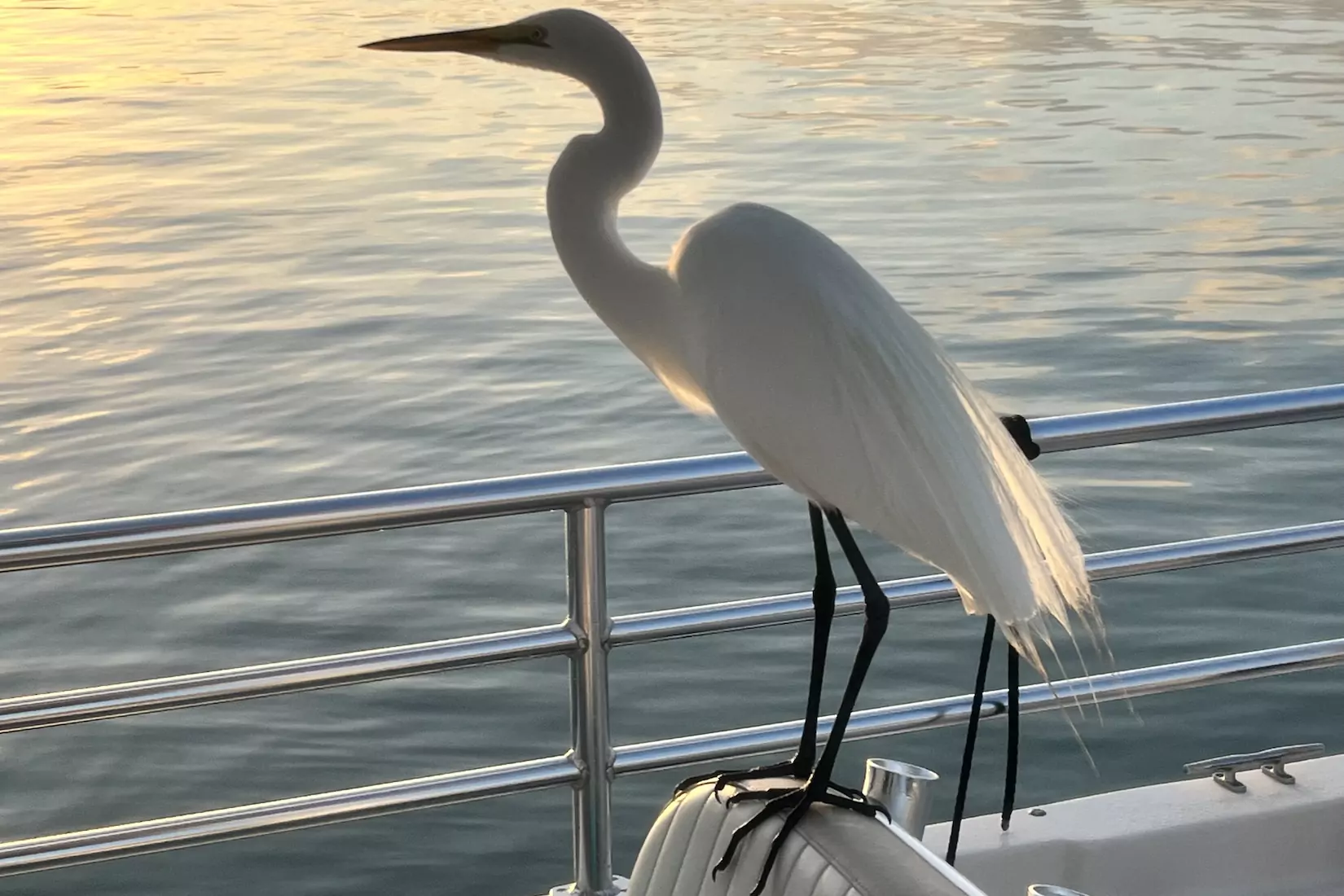
Florida Island Tours’ eco tour is a relaxed, family-friendly journey through the Ten Thousand Islands. We depart from our private Goodland dock with easy, free parking. Then we weave quiet mangrove creeks and open bays, reading tides and wind. Your captain shares simple bird IDs, dolphin behavior, and local history. We often add a gentle sandbar stop for shelling and wading. Cameras capture spoonbills, ospreys, and playful dolphins at respectful distances. Comfort comes standard with shade, dry storage, and kid-sized life jackets. Finally, we tailor pace and route to your family, so every moment feels easy and memorable.
2.5 hours: $129 Tickets | $625 Private
When to visit and See Lots of Ten Thousand Islands Birds
 Winter brings cooler air, big morning tides, and dense mixed flocks. Many shorebirds overwinter, and rookeries gear up for spring. Spring delivers nesting action, kite displays, and courtship flights. Summer starts calmly at dawn with brilliant feeding windows. Afternoon storms shorten plans, so mornings shine for families—fall migration layers new species upon familiar locals.
Ten Thousand Islands Birds Spotting made simple for kids and grandparents
Start with shape first, then color, then behavior, and sound. Encourage kids to describe what the bird is doing now. Ask them to compare beaks, legs, and hunting styles out loud. Keep voices low when close and let the boat drift gently. Use binoculars with wide fields and lower magnification for ease. Celebrate short looks, then circle wider for longer views.
Bird-friendly etiquette that protects rookeries and chicks
Give resting rafts and dense rookeries generous space to relax. Avoid drones near birds because they trigger defensive responses. Land only where your captain confirms no nesting occurs. Walk below any resting flock so birds do not flush. Keep snacks secure to avoid attracting opportunistic gulls. Teach kids that quiet observation helps wildlife stay natural.
Family gear that actually helps you see more Ten Thousand Islands Birds
Bring polarized sunglasses to cut glare and reveal fish activity. Pack lightweight binoculars with straps sized for smaller faces. Add a hat, sunscreen, and a light long-sleeve layer. Carry water and fruit for quick refuels between sightings. Keep phones on silent to avoid flushing shy birds. Wipes help little hands after sandy shelling beach stops.
A sample family route from Goodland with Florida Island Tours
We often depart our private Goodland dock and slide east first. The water stays calm behind islands and helps everyone relax. Mangrove edges offer ospreys, ibises, and elegant herons within minutes. Then we time a sandbar stop for calm terns and skimmers. If conditions align, spoonbills feed on a nearby flat quietly. We finish by tracing a rookery channel at a respectful distance.
Ten Thousand Islands Birds Fun Fact
Brown pelicans were once endangered but rebounded after pesticide bans. Their comeback reminds families that protection works when science guides action.
Ten Thousand Islands Birds Captain’s Tip
Watch the tide line on sandbars, it’s like a moving buffet belt. Birds stack where foam, floating grass, and tiny drift meet quietly.
”We had an excellent trip with Captain Nate. His boat is very comfortable and clean. Nate’s knowledge of the local flora and fauna as well as his historical knowledge was immense. There isn’t even a seashell that he couldn’t identify immediately. Saw a pod of dolphins, a ton of birds including a bald eagle, nesting Ospreys, white Pelicans, and more birds than I even knew existed. Captain Nate told us about them all. Great for all ages would thoroughly recommend Nate and his tour.
Peter M.London, UK
Frequently asked questions: Ten Thousand Islands Birds
 Are bird sightings guaranteed on a short family Ten Thousand Islands birds tour?
 Are bird sightings guaranteed on a short family Ten Thousand Islands birds tour?
Birds move with tides, wind, and bait so that no operator can guarantee species. That said, variety is consistently high along protected routes. Families usually observe herons, pelicans, ibis, and at least one raptor. Seasonal specials like spoonbills or kites appear with favorable conditions. Your captain adjusts course to chase the best windows. Flexible timing improves outcomes for curious kids.
What tour length works best for mixed-age groups?
Two to three hours fit attention spans and tide opportunities well. That window allows both mangrove edges and a sandbar visit. It also offers time to linger near rookeries from afar. Shorter trips can still deliver headliners on calm mornings. Longer private charters add remote flats and additional rookery channels. Share your ages and interests so that pacing matches your family’s needs.
Are private Tours for the Ten Thousand Islands birds available?
For families who want maximum flexibility, consider a private tour. Florida Island Tours tailors the route to ages, interests, and tides. So kids chase dolphins, grandparents relax, and photographers get clean angles. Your captain adjusts pace, adds beach stops, and times wildlife perfectly. Private trips also fit special moments like birthdays and reunions. You launch from our private Goodland dock with easy, free parking. Tell us what matters, and we will design your ideal day. Book a private charter and enjoy the Ten Thousand Islands your way.
Do we need binoculars if to see Ten Thousand Islands Birds?
Close approaches are not the goal near resting or nesting birds. Binoculars allow a respectful distance while revealing rich details safely. Light binoculars with a wide field help beginners find birds quickly. Our captains position boats for angles, not proximity alone. Kids love “first spot” games through binoculars at each stop. Bring a spare pair to reduce arguments in exciting moments.
What weather patterns create the best action for Ten Thousand Islands birds?
Calm mornings with moving water create predictable feeding sessions. Gentle east or northeast winds shelter many inside channels well. Post-front mornings can be spectacular for raptors and shorebirds. Overcast light helps photography because whites hold detail nicely. Scattered showers sometimes bunch bait at bar edges briefly. Captains watch tide and wind graphs to plan each route.
How close can we get to Ten Thousand Islands birds rookeries for photos?
We maintain buffer distances that keep colonies relaxed and quiet. The goal is natural behavior, not startled wings and calls. Long lenses capture expressions without changing the scene. The best images show birds acting like no one is watching. Your captain will coach angles, sun position, and drift lines. Families leave with memories and ethics they can feel proud of.
Why a guided 10000 Islands eco tour boosts learning and joy
A seasoned captain reads water like a notebook full of clues. Minor course adjustments stack your day with clean opportunities. Families learn faster when identification pairs with behavior and habitat. Kids love making predictions that actually come true on the route. A guide keeps everyone safe while focusing eyes where action builds. Florida Island Tours 10,000 Islands Birds, Dolphins, and Shelling Eco Tour blends real-time teaching with relaxed family fun.
Plan your family’s Ten Thousand Islands birds adventure with confidence
Pick a morning with kinder wind and a helpful falling tide. Dress in layers and pack sun protection for shifting conditions. Charge phones, but frame moments with your eyes first. Give each child a simple job, like “pelican counter” or “osprey spotter.” Invite grandparents to hold binoculars during tight turns and drifts. Then meet at our Goodland dock and let the day unfold.
Final word from the water about Ten Thousand Islands Birds
Ten Thousand Islands birds turn ordinary mornings into shared discoveries. Every tide writes a different story across bars and creeks. Families remember the hush near rookeries and the sudden pelican splash. Kids keep the names, then ask better questions next time out. Guides love watching confidence grow with each new identification. Florida Island Tours is ready when your family is ready, too.