

Table of Contents
- Why Remote Barrier Island Shelling Tours Beat the Crowded Beaches
- Quick Comparison: Remote Barrier Island Shelling Tours at a Glance
- 1. Florida Island Tours: Captain-Led Shelling With a Naturalist Aboard
- 2. Other Boat-Access Shelling Options Around Marco Island and Naples
- Kice Island Shelling: What Makes This Barrier Island Different
- The Best Time to Go Shelling in Marco Island
- What to Bring on a Shelling Tour (and What to Leave Behind)
- How Long Does a Marco Island Shelling Tour Last?
- Frequently Asked Questions
Last Updated: October 20, 2026
Why Remote Barrier Island Shelling Tours Beat the Crowded Beaches
Walk onto a public beach at low tide and you’ll find footprints, sandcastles, and maybe a broken coquina. That’s the difference remote barrier island shelling tours are selling, and it’s a real one.
This guide from Florida Island Tours covers what these trips actually involve, how they compare, and how to pick one that fits your crew.
Here’s the honest part most guides skip: the shells are better because the access is harder. A barrier island that sits behind a mangrove maze and a shallow pass doesn’t get weekend traffic.
- No road access, no crowds, no competition for the good stuff
- Fresh deposits after every tide and front
- Wildlife that behaves like wildlife, not like a photo prop
The single biggest factor in shell quality isn’t luck or secret spots. It’s how recently a boat-only beach has been walked, and how few people can get there.
Quick Comparison: Remote Barrier Island Shelling Tours at a Glance
Remote barrier island shelling tours range from shared two-hour outings to private half-day charters, and the differences matter more than the marketing suggests. The table below compares trip formats rather than brand names, because the format is what actually shapes your day on the sand.
| Format | Typical Duration | Group Size | Beach Time | Best For | What to Confirm |
|---|---|---|---|---|---|
| Captain-led small-group shelling tour | 3-4 hours | Capped, often 6-12 | Roughly half the trip | Families, couples, first-time shellers | Group cap, guide credentials, tide-based routing |
| Shared group boat tour | 2-3 hours | Larger, variable | Often under an hour | Solo travelers, budget-minded visitors | Actual headcount and number of island stops |
| Two-hour sand bar trip | 2 hours | Variable | Brief | Tight itineraries | How much of the two hours is transit |
| Private charter | Half or full day | Your party only | You set the pace | Groups with kids, grandparents, or mobility needs | What’s included, landing conditions, weather policy |
| Beach-focused island cruise | 2-4 hours | Variable | Longer beach stop | Travelers who want beach time with shelling on the side | Whether a naturalist is aboard or just a driver |
How We Evaluated These Shelling Tours
We looked at five things: whether the trip reaches a boat-access-only beach, how much time you actually spend with your feet in the sand, whether a guide is aboard to read the tides and identify finds, how transparent the operator is about group size and inclusions, and what happens when weather turns.
Duration claims deserve scrutiny. A two-hour tour sounds generous until you account for the ride out and back, which can eat a big chunk of the clock. Ask how long you’re on the beach, not how long you’re on the boat.
When you call to book, ask three questions in this order: How many people are on the boat? How long are we on the beach? Is a naturalist aboard? The answers sort operators faster than any brochure.
1. Florida Island Tours: Captain-Led Shelling With a Naturalist Aboard
Our pick for most travelers is our own shelling tour. Every trip pairs a US Coast Guard certified master captain with a University of Florida certified Master Naturalist guide. That combination changes the day.
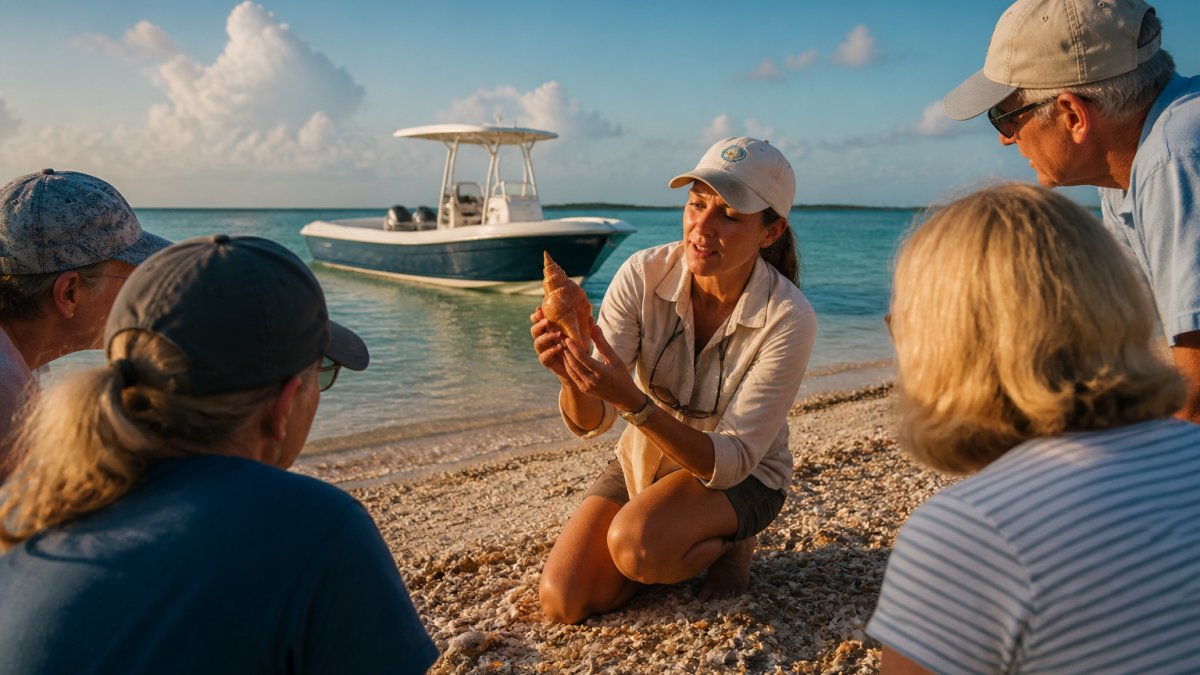
What that looks like in practice:
- A shelling plan built around the tide, not a fixed script
- Guidance on which shells to keep and which to leave, including live ones
- Wildlife context along the way, from ospreys to dolphins to the occasional manatee
We won’t promise you a junonia. Nobody honestly can. What we can promise is a captain who knows where the shell line tends to form after a west wind and a naturalist who can tell you what you just picked up.
Ask your captain which direction the wind has been blowing for the past two days. Onshore winds push shell material up the beach face; offshore winds leave it in the shallows. It’s the single most useful question you can ask before a shelling trip.
2. Other Boat-Access Shelling Options Around Marco Island and Naples
Beyond our own trips, the Marco Island and Naples area has several boat-based shelling options, and they’re not interchangeable. Shared group tours keep costs down and work well for solo travelers.
Two-hour sand bar tours suit tight itineraries, though beach time is limited once you account for the run out and back. Keewaydin Island cruises lean toward beach time with shelling as a bonus rather than the main event.
A few questions sort them fast:
- How many people will be on the boat?
- How long do we actually spend on the beach?
- Is a guide aboard, or just a driver?
“Small group” means different things to different operators. Some cap at six, some at thirty. Ask for the number in writing before you book, or you may spend a shelling trip shoulder to shoulder with strangers.
Kice Island Shelling: What Makes This Barrier Island Different
Kice Island shelling earns its reputation because the island sits at the outer edge of the Ten Thousand Islands, where Gulf currents sweep shell material onto an unbroken shoreline.
The shell mix reflects that exposure. Expect whelks, conchs, scallops, and the occasional prize.
Access rules matter here. Much of the surrounding area falls within the Ten Thousand Islands National Wildlife Refuge, managed by the U.S. Fish and Wildlife Service.
The Best Time to Go Shelling in Marco Island
The best time to go shelling in Marco Island is the hours around a falling low tide, especially in the days after a cold front or a strong west wind.
Seasonally, winter and early spring bring clearer water and more frequent fronts, which many shellers prefer. Summer offers calm mornings but more boat traffic on the water. Either way, tide beats season.
- Check the tide chart before you book, not after
- Aim for the two hours on either side of low tide
- Go early; the first boat to a fresh beach gets the best of it
What to Bring on a Shelling Tour (and What to Leave Behind)
What to bring on a shelling tour comes down to three things: something to carry shells, something to protect your feet, and something to keep the sun off. Everything else is optional. But the more important list is what you leave behind, because responsible collecting is what keeps these beaches worth returning to.
Bring:
- A mesh bag or bucket for your finds
- Water shoes or old sneakers; the shell hash is sharp
- Reef-safe sunscreen, a hat, and polarized sunglasses
Leave behind:
- Live shells and anything still moving
- Sand dollars with visible fuzz (those are alive)
- Nesting birds and posted habitat
How to Tell a Live Shell From a Dead One
This is the skill most first-time shellers wish they had before they started pocketing. A live mollusk is inside the shell, and the signs are usually obvious once you know them.
- A closed or tightly sealed opening. A live whelk or conch holds its operculum (the hard “door”) shut. If you can’t see inside, put it back.
- Fuzz or fine hair on a sand dollar. Live sand dollars are covered in tiny spines that look like velvet. A dead one is smooth and white.
- A wet, glossy interior or a smell. Freshly dead shells can still smell; live ones definitely do.
The rule of thumb: if you’re not sure, leave it. A shell that goes back in the sand is a shell someone else gets to find later, and a live animal gets to keep living.
Collection Rules Worth Knowing Before You Pocket Anything
Florida regulates the harvest of live shellfish and protects certain species, and details are best confirmed through the Florida Fish and Wildlife Conservation Commission before you pocket anything questionable. Dead shells on the beach are generally fair game; living creatures are not.
A few practical points that apply on these barrier islands:
- Protected areas have their own rules. Much of the surrounding shoreline falls within the Ten Thousand Islands National Wildlife Refuge, managed by the U.S. Fish and Wildlife Service. Refuge beaches may restrict collecting, and posted areas are off-limits.
- Nesting season matters. Shorebirds and sea turtles use these beaches in spring and summer. Give posted nesting areas a wide berth and keep your distance from any bird that is acting distressed or dragging a wing.
- Take a few, not a bucketful. A handful of dead shells is a souvenir. A full cooler is a haul, and it removes material that would otherwise break down and rebuild the beach.
“Live shelling” is a different activity from beachcombing, and it is regulated. If an operator advertises taking live shells, ask exactly what that means and confirm it is legal for the species and location before you book.
Skip the glass containers and the heavy cooler. A soft cooler fits under a boat seat, and a mesh bag rinses clean in the shallows before you head back. Rinse your shells in fresh water once you’re home to keep the salt from dulling them.
How Long Does a Marco Island Shelling Tour Last?
How long does a Marco Island shelling tour last? Most run two to four hours, and the number that matters is beach time, not total trip length.
Private charters give you the most control. Want to stay an extra half hour because the whelk line is producing? That’s the advantage of a dedicated boat. Shared tours run to a schedule.
When comparing tours, ask for beach time specifically. It’s the honest measure of what you’re buying, and most listings don’t state it.
Planning a shelling trip means juggling tides, weather, and access, and that’s before you factor in kids, grandparents, and everyone’s tolerance for an early start. We built our shelling tour around exactly that problem: a US Coast Guard certified master captain, a University of Florida certified Master Naturalist guide, small groups, and a route chosen for the day’s conditions rather than a fixed script. If you’d rather have the boat to yourselves, our private boat tours let you set the pace.
Frequently Asked Questions
What is a remote barrier island shelling tour?
It is a boat trip that takes you to beaches you cannot reach by car, usually sandbars and barrier islands in the Ten Thousand Islands area. A captain handles the navigation, tides, and landing, then you walk the shoreline hunting seashells. Many trips also include wildlife viewing on the ride out. Because these beaches see far fewer footprints than public access spots, shelling conditions tend to stay better, though nothing about shelling is ever guaranteed.
Can you reach Kice Island by boat, and is Kice Island shelling worth it?
Yes, Kice Island is reached by boat only, so a charter or tour is the practical way to get there. Kice Island shelling appeals to people who want a wilder beach with fewer people and a real mix of whelks, conchs, and smaller shells washing in with the tides. Conditions change daily with wind and weather, so ask your captain what the shoreline has looked like that week rather than expecting a specific shell.
When is the best time to go shelling in Marco Island?
The best time to go shelling in Marco Island usually lines up with low tide, especially a low tide that follows a cold front or a stretch of onshore wind. Winter and early spring tend to bring clearer water and more shell movement along the barrier islands. Summer works too, but afternoon storms can cut a trip short. Early morning departures often mean calmer water and first pick of the beach before anyone else lands.
How long does a Marco Island shelling tour last?
Most shelling trips run about two to four hours, including the boat ride each way and time on the beach. Shorter outings suit families with young kids, while longer trips let you hit two or three islands and wait out a tide. Ask how much of the total is beach time versus travel, since that split matters more than the headline duration. Private charters can usually be adjusted to your group’s pace.
What should I bring on a shelling tour?
Bring sunscreen, a hat, polarized sunglasses, water, and a light bag or bucket for your finds. Water shoes help on shell-covered shorelines, and a towel is handy after wading. Leave live shells and living creatures where you find them, and check current Florida rules before keeping anything. A small mesh bag rinses sand off easily, and a phone in a waterproof case keeps your photos safe on the ride back.