

Last Updated: October 26, 2026
Quick Summary
A sand dollar shelling tour focuses on hunting shells and sand dollars in their natural habitat, while a Breakwater Adventures-style tour offers a mixed experience that includes shells, wildlife, and scenery. Choose a shelling-focused tour if the hunt is your main event, or a broader tour if your group wants variety.
- The best shelling window is usually the two hours on either side of low tide, especially a falling tide that just exposed fresh beach.
- Sand dollar shelling tours use tide charts and wind conditions on purpose to pick beaches and timing that improve your odds.
- Dead shells you find on the beach are fair game to collect, but live shells and living creatures should stay in the water.
- A shelling-focused trip suits those who want shells to be the main event, while mixed tours work better for families with different interests.
- Ask any operator if they plan the landing around low tide, the answer tells you more about your odds than any brochure.
Table of Contents
- What You’re Really Choosing Between
- Marco Island Shelling Tours: What Makes Them Different
- Understanding Breakwater Adventures Shelling Tour Options
- How to Find Sand Dollars: What Each Tour Actually Delivers
- Responsible Shell Collecting and What You Can Keep
- Choosing Your Next Shelling Adventure
- Frequently Asked Questions
What You’re Really Choosing Between
Planning a shelling adventure in Southwest Florida? A sand dollar shelling tour and a Breakwater Adventures shelling tour sound similar. Knowing the differences helps you pick the right fit.
One focuses on the hunt itself, finding sand dollars and other shells in their natural habitat. The other takes a broader approach. Neither is universally better, it depends on what you want from your time on the water.
Here’s what each experience really delivers, how they compare, and how to decide which one matches your priorities.
Marco Island Shelling Tours: What Makes Them Different
There’s a lot of variety among shelling tours in this area, and not every tour is built the same way.
A sand dollar shelling tour is built around one goal: finding sand dollars and other shells. These tours head to areas where shells wash ashore regularly. The boat gets you to beaches; the rest is up to the water and your hunting skills.
The Ten Thousand Islands Wildlife Refuge protects vast stretches of shoreline in this region.
Other tours may offer a broader experience. It’s less about hunting shells and more about experiencing the whole ecosystem.
Both approaches work, it depends on whether you want a laser-focused shelling tour or variety built in.
| Aspect | Sand Dollar Shelling Focus | Breakwater Adventures Approach |
|---|---|---|
| Primary Goal | Find sand dollars and shells | Mixed experience: shells + wildlife + scenery |
| Boat Type | Purpose-built shelling vessel | General-purpose tour boat |
| Guide Expertise | Specialized in shells and tides | Generalist naturalist |
| Typical Duration | 2-3 hours | 2-4 hours |
| Beach Access | Remote, tide-dependent locations | Established, accessible beaches |
| Best For | Shell collectors, focused hunts | Families wanting variety |
The key difference isn’t quality, it’s specialization. On a sand dollar shelling tour, the focus is shells and tides.
You can explore the specific sand dollar shelling tour offerings to see exactly what’s included in a dedicated shell-hunting experience.
Understanding Breakwater Adventures Shelling Tour Options
That structure shapes what the day feels like and what it’s best for.
The real strength: variety that keeps a mixed group happy
If your family can’t agree on one focus, a mixed-experience tour may suit different interests. One person wants dolphins, another wants shells, a third just wants wind in their face. For first-timers who want a taste of everything the Ten Thousand Islands offer, that broad approach makes sense.
The trade-off: shelling isn’t the organizing principle
Here’s the difference. On a shelling-focused tour, the tide chart and wind can influence where you go and when you land. A mixed tour may have other priorities alongside shelling.
What to expect from the format
- Shared groups. You’ll be with other visitors, great if you enjoy meeting people, less ideal for an intimate, customized day.
- Set schedules and routes. Predictable timing makes booking easy, but leaves less flexibility to chase conditions.
- A broader itinerary. Expect shelling time plus other stops, not a single-minded hunt.
A quick way to decide
| If this sounds like you… | Lean toward… |
|---|---|
| Shells are the main event; you want the best odds | A sand dollar shelling trip |
| Your group has mixed interests | A Breakwater Adventures-style mixed tour |
| You want a private, customized day | A specialized private trip |
| You prefer a set schedule and easy booking | A shared, mixed tour |
| You’re a first-timer who wants a taste of everything | A mixed tour |
Neither format is better in the abstract, they’re built for different priorities. Match the format to what you want from the day.
Check out the full range of shelling tours to see how Breakwater Adventures fits into the broader landscape of options available.
How to Find Sand Dollars: What Each Tour Actually Delivers
So what are your actual chances of finding sand dollars, and what does each tour do to improve them?
Sand dollars aren’t scattered randomly, they show up in patterns, and reading those patterns changes your odds. The living animal, a flat, fuzzy, brownish-gray urchin relative, lives just below the sand in shallow Gulf flats and seagrass edges. When it dies, the skeleton gets tumbled by waves and washes ashore. That’s why you find them at the wrack line, in the shallow wash of a falling tide, and where currents push shells onto gently sloping shore.
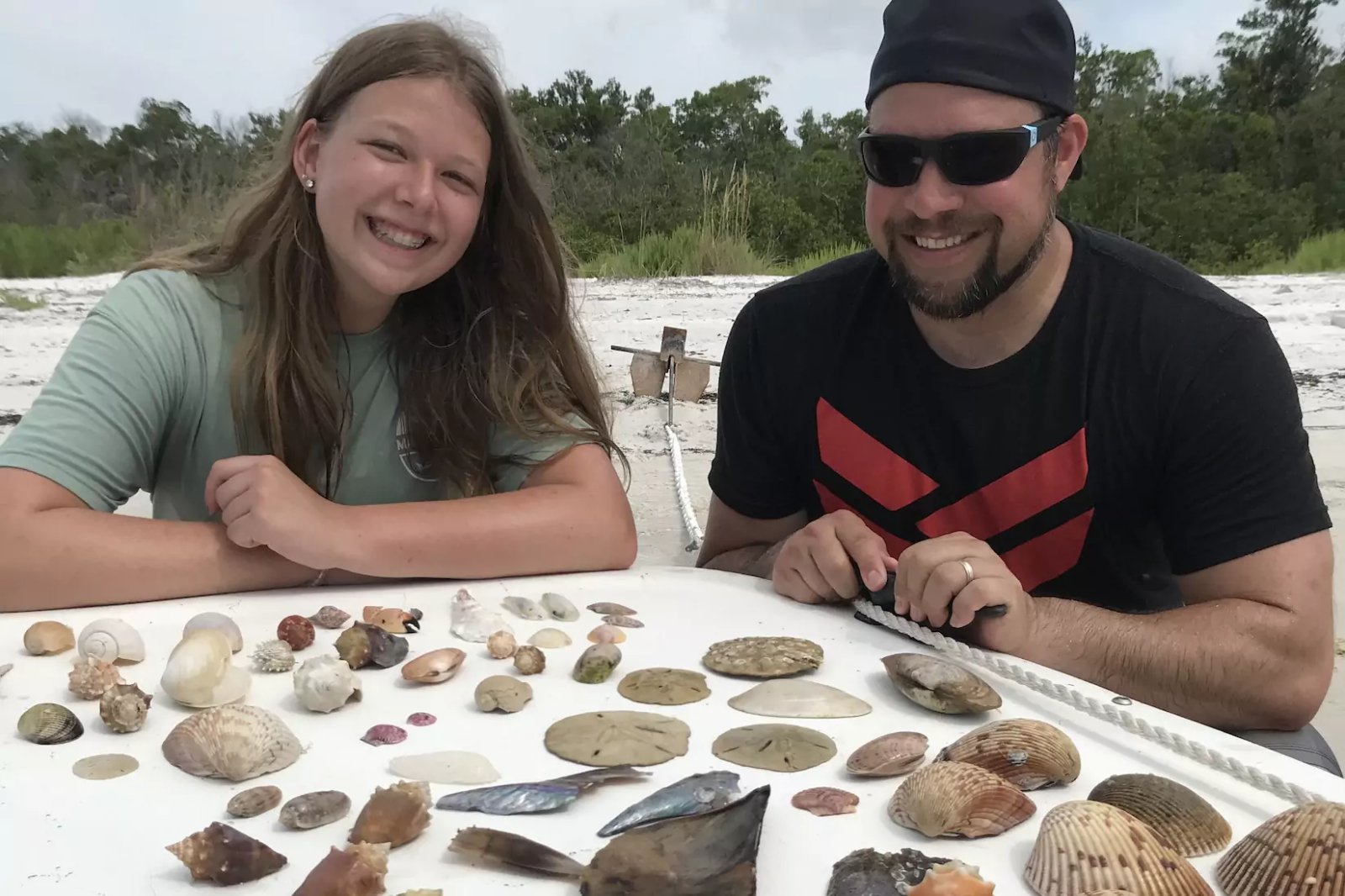
Mastering the art of spotting these delicate tests requires a level of focus that often hinges on choosing between tour types to ensure your excursion provides the necessary quiet and solitude.
The conditions that actually matter
- Tide stage. The best window is usually the two hours on either side of low tide, especially a falling tide that just exposed fresh beach.
- Recent weather. Onshore winds and the tail end of a storm push shells up onto the beach; a calm week means fewer fresh arrivals.
- Season. Late fall through spring brings more cold fronts and stronger onshore push in this part of the Gulf, when many shellers report the best beachcombing. Summer is calmer and hotter.
- Beach type. Gently sloping, shell-hash beaches on the barrier islands hold more than steep, surf-pounded shorelines. That’s why boat access matters, the productive stretches are often the ones you can’t drive to.
What a focused sand dollar shelling trip does with that
A tour built around shelling uses those variables on purpose. The captain picks the beach based on the day’s tide and wind, times the landing for the low-tide window, and knows which stretches have been producing. On a good day with the right tide and a recent blow, a small group can reasonably expect several intact sand dollars plus other shells. On a flat, calm, high-tide day, the same beach can look picked clean.
That’s the honest part: sand dollars are wild and conditions rule. No captain can promise a haul. What a specialized trip buys you is better timing and better ground, which is most of the battle.
What a broader tour does with that
If sand dollars are the goal, ask any operator one question before you book: Do you plan the landing around the low tide? The answer tells you more about your odds than any brochure.
The practical difference comes down to what you want from the day. A shelling-focused trip suits those who want shells to be the main event.
Responsible Shell Collecting and What You Can Keep
Before you head out, know what you can take home and what should stay in the water.
Dead shells, the empty skeletons you find on the beach, are fair game. A sand dollar skeleton is a common find and a great souvenir. Lightning whelks, conchs, and other shells that have already washed ashore are yours to collect. That’s the whole point of a shelling tour.
Live shells are different. If a shell has an animal living inside it, leave it alone. That means live conchs, live clams, live anything. The same goes for sea urchins and other living creatures. They belong in the water, and removing them damages the ecosystem.
Shelling tour FAQs cover the specifics of what’s legal and what’s responsible to collect in this area.
A good guide can teach you the difference and help you identify what you’re picking up while respecting the living ecosystem.
Shelling tours should emphasize responsible collecting. If a tour operator doesn’t mention it, consider asking about the operator’s approach.
Choosing Your Next Shelling Adventure
So which one is right for you?
Pick a sand dollar shelling tour if the hunt is your main event.
There’s also a middle ground: explore another comparison that might help you think through similar choices if you’re still deciding.
The difference is how focused the experience is and what else you get along the way.
If it’s the shells, go specialized. If it’s the whole experience, go broad.
At Florida Island Tours, we believe the best shelling adventure is the one that matches what you actually want from your time on the water. Our US Coast Guard certified master captains and University of Florida certified Master Naturalist guides customize every tour to your interests. Book your shelling adventure today.
Frequently Asked Questions
What’s the difference between sand dollar shelling tours and other Marco Island shelling tours?
Sand dollar shelling tours focus specifically on hunting for sand dollars and their skeletons. Other shelling tours may have a broader focus. Ask the operator what the tour includes and what you can expect.
Can I legally keep sand dollars I find on a shelling tour?
For responsible shelling, leave live sand dollars and other living creatures undisturbed. Check current local regulations and respect wildlife refuge boundaries.
How to find sand dollars on a boat tour versus going to the beach yourself?
A guided shelling tour and a visit to a public beach offer different ways to explore. Shelling conditions can vary with weather, tides, and other factors. Ask the tour operator about the experience and schedule.
What should I expect in terms of finding sand dollars on a shelling trip?
Shelling conditions and what you find can vary. Sand dollars are wild, and no sighting or particular haul is guaranteed. The experience can include exploring beaches and learning about the islands.