

Last Updated: October 28, 2026
Quick Summary
To find seashells Marco Island visitors love, pick a beach that fits your walking range, time your visit for a falling low tide, and scan the wrack line of seaweed and debris at high tide. Tigertail Beach is easiest for families, while the barrier islands offer the most shells.
- Tigertail Beach has parking, restrooms, and a snack stand, making it easiest for families.
- Look for the dark wrack line of seaweed and debris at the high tide mark.
- The best shelling usually happens on a falling tide, arriving an hour or two before low tide.
- Kice Island and Dickman’s Island are reachable only by boat and have thick wrack lines.
- Leave live shells and sand dollars with spines in the water, since they are living creatures.
Table of Contents
- Pick the Right Beach on Marco Island
- Time Your Walk for the Best Low Tides
- Know Which Rare Shells to Watch For
- Check Conditions and the Forecast Before You Go
- Frequently Asked Questions
Pick the Right Beach on Marco Island
Finding seashells on Marco Island starts with picking the right beach, and the best spot for you depends on how far you’re willing to walk. If you’re planning to find seashells Marco Island style, start here.
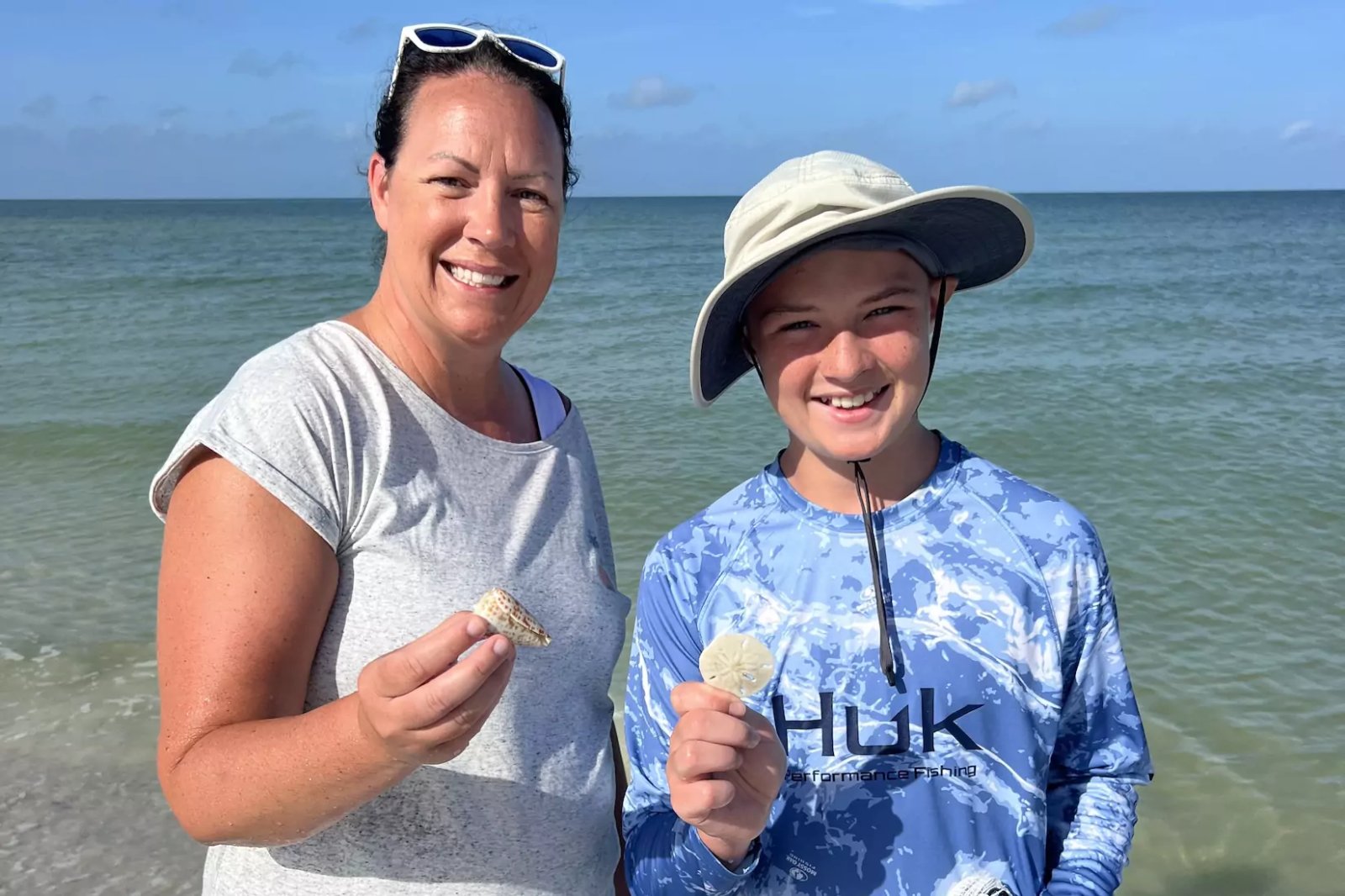
Tigertail Beach is the classic starting point, with parking, restrooms, and a snack stand, easiest for families and anyone with limited mobility. The catch: reaching the shell-rich sandbar and Gulf-facing shore means wading a shallow lagoon that can be knee-deep at higher water. Bring shoes you don’t mind getting wet, or go at a lower tide.
South Beach offers the simplest access, paved parking, boardwalks, and wide, flat sand. It’s groomed more often, so big shell piles are less common, but it works for strollers, wheelchairs, and short walks from the car.
Kice Island and Dickman’s Island, across Caxambas Pass, are where the serious shelling happens. Reachable only by boat, these barrier islands keep thick wrack lines and thin crowds. Our shelling boat tours run out there and through the surrounding Ten Thousand Islands.
Wherever you go, look for the wrack line, the dark ribbon of seaweed, seagrass, and debris at the high tide mark. The same waves that push seaweed ashore push shells with it. Walk slowly, keep your eyes low, and check the sand just below it, where shells settle as the water drains.
Timing matters: the best shelling usually happens on a falling tide, when the water pulls back and exposes fresh sand. Arrive an hour or two before low tide, follow the water out, and you’ll find seashells Marco Island beaches are known for.
If you’d rather skip the beach hunt, a Marco Island shelling tours overview can point you toward guided options, or you can check out our shelling boat tours on Marco Island for a trip to the remote barrier islands.
Wear closed-toe water shoes on Tigertail’s lagoon crossing and on the barrier islands. Broken shells and oyster bits hide in the sand, and a little protection goes a long way.
Time Your Walk for the Best Low Tides
Low tide is when the good stuff shows up. According to Sand Dollar Shelling’s guide to shelling timing, about 21% of low tides in 2026 fall below chart datum, the level where the most shells are exposed.
Pick a morning or late afternoon low tide. If you want to reach the remote barrier islands at that tide, see our guide to shelling tours that go there.
Know Which Rare Shells to Watch For
Most shellers go home with lightning whelks, fighting conchs, lettered olives, and the occasional sand dollar. The rare stuff takes patience, and knowing what you’re looking at.
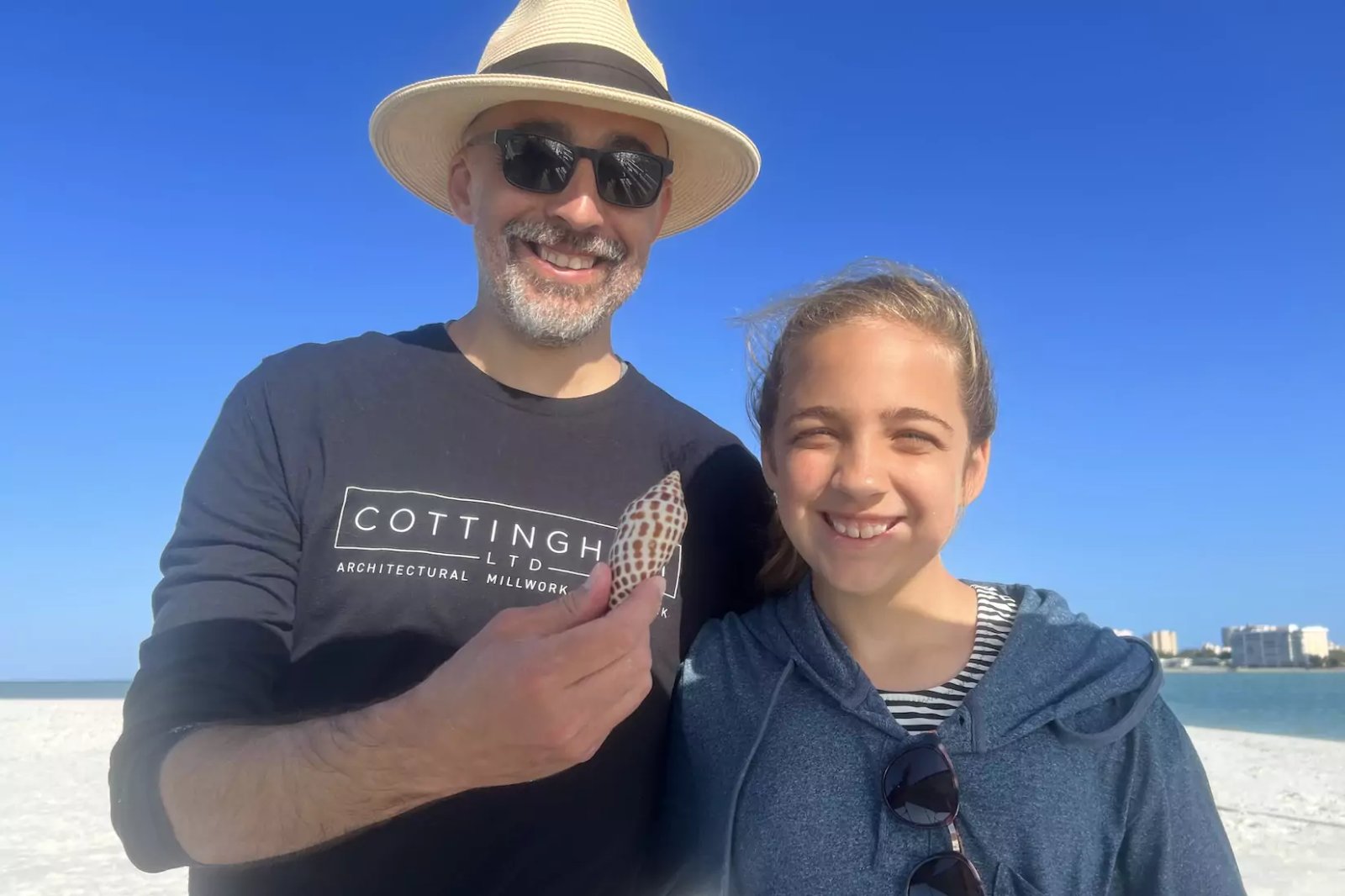
The junonia is the prize many shellers hope for: smooth and spindle-shaped, with brown spots on cream, turning up on Gulf-facing beaches and barrier islands far less often than the common finds. If you spot one, you’ll know it, but rare shells show up on their own schedule, not yours.
Here’s a quick field guide to the shells you’re most likely to meet:
- Lightning whelk, large, left-handed spiral (the opening is on the left when the point is up), with fine brown lines. Often found empty and intact.
- Fighting conch, sturdy, with a flared lip and a deep orange or pink opening. Common on the Gulf side.
- Letterbox scallop, ribbed, fan-shaped, and often brightly colored. Easy to spot in the wrack.
- Sand dollar, flat, round, and gray when dead and dry. A live one is covered in fine, dark spines and should go back in the water.
- Shark eye, a smooth, round, gray-green shell that looks like a marble. Easy to overlook.
Before you pocket anything, check whether it’s empty. A shell that feels heavy, smells like the sea, or has a live creature attached goes right back where you found it. Live shells, sand dollars with spines, and any shell with an occupant are off-limits, that’s how these beaches keep producing shells for the next person.
Leave live shells and living marine creatures where you find them. A shell with an animal inside is a home, not a souvenir.
For a deeper dive on the junonia, how to find a junonia shell on Marco Island covers where and when to look. Our captains take shellers to the barrier islands across Caxambas Pass.
Keep your expectations realistic and enjoy every common shell along the way. The hunt is the fun part.
Here’s a quick field guide to the shells you’re most likely to meet, with the key identifying features for each.
| Shell | Key feature | Note |
|---|---|---|
| Lightning whelk | Left-handed spiral, fine brown lines | Often found empty and intact |
| Fighting conch | Flared lip, deep orange or pink opening | Common on the Gulf side |
| Letterbox scallop | Ribbed, fan-shaped | Easy to spot in the wrack |
| Sand dollar | Flat, round, gray when dead and dry | Live ones have dark spines and go back in the water |
| Shark eye | Smooth, round, gray-green | Easy to overlook |
Check Conditions and the Forecast Before You Go
Conditions change fast on the Gulf. Local forecasters use a shelling score out of 100 that factors in wind, surf, tide, and sky conditions. According to Go Visit Marco Island’s shelling conditions page, a score of 65 or higher is good, and 80 or higher is excellent.
Check the tide chart the day before you go.
Bring a small bag or bucket, sunscreen, and water.
Frequently Asked Questions
What are some rare shells to find on Marco Island?
Most finds on Marco Island are common, but patience can turn up something special. Keep an eye out for junonia, lightning whelks, fighting conchs, and banded tulips, which are all worth a closer look. Calico scallops and intact sand dollars also show up now and then. Walk slowly, check the wrack line where seaweed collects, and take a moment with every shell that catches your eye. The rarer ones often hide among the broken pieces.
Is it better to look for seashells at high tide or low tide?
Low tide is usually the better choice. When the water pulls back, it exposes more sand and reveals shells that stayed hidden under the surf. Many shellers also search the tide line right after high tide, when the water has just pushed new treasures onto the shore. Plan your walk around the tide chart.
Can you take live shells from Marco Island beaches?
Please leave live shells where you find them. A shell with a living creature inside plays an important role in the ecosystem, and removing it harms the animal. Stick to empty shells that have already been abandoned, and put back anything still alive. Responsible collecting keeps these beaches healthy for the next visitor, the next wildlife encounter, and the next generation of shellers.